

Shah-i-Zinda Ensemble
A street of 11th–19th-century mausoleums on the slope of Afrasiab hill: tiles in every shade of blue, the legend of the “Living King” and a pilgrimage site.
About this place
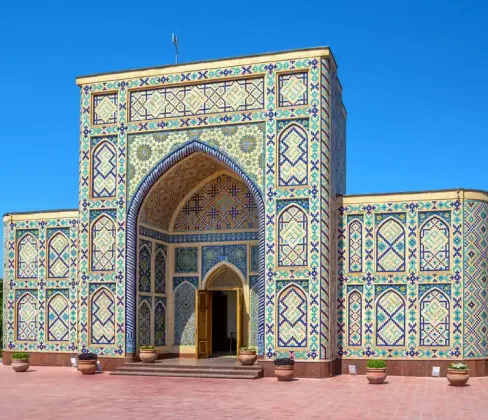
Shah-i-Zinda is a necropolis where mausoleums line a narrow lane climbing the slope of Afrasiab hill. The name means “the Living King”. The facades are covered in carved majolica and mosaic in every shade of blue, and many travellers call it the most beautiful place in Samarkand.
Legend and history
The ensemble grew up around the revered tomb of Qusam ibn Abbas, a cousin of the Prophet Muhammad. Tradition says he came to these lands to preach Islam in the 7th century. According to legend, Qusam did not die but went underground and lives there still — hence the name.
The earliest buildings date from the 11th–12th centuries, but most of the mausoleums appeared in the 14th–15th centuries, under Timur and Ulugh Beg. Timur’s relatives, noble commanders and scholars are buried here. The ensemble is part of the UNESCO site “Samarkand — Crossroad of Cultures”.
The mausoleums stand wall to wall, and each shows off its own decorative technique: carved terracotta, glazed majolica, mosaic. That is why Shah-i-Zinda is often called an open-air museum of tilework.
What to see
- The entrance portal at the foot of the slope, built under Ulugh Beg in 1434–1435.
- The staircase to the upper group of mausoleums. Tradition says you should count the steps on the way up and down: if the numbers match, your soul is pure.
- The Shirin-Bika-Aka Mausoleum — the tomb of Timur’s sister, known for its exquisite mosaic.
- The Qazi-zade Rumi Mausoleum — the largest domed building in the ensemble, associated with the astronomer who taught Ulugh Beg.
- The Qusam ibn Abbas complex at the top — the most revered part of the necropolis.
Practical tips
- Time. Allow 1–1.5 hours.
- Light. The best photos come in the morning, when there are fewer people and the soft sun brings out the colour of the tiles.
- Dress. This is an active pilgrimage site: cover shoulders and knees; women should ideally cover their heads.
- Etiquette. Speak quietly and do not photograph people at prayer.
- Shoes. Comfortable and flat: there are steps and uneven stones ahead.
What’s nearby
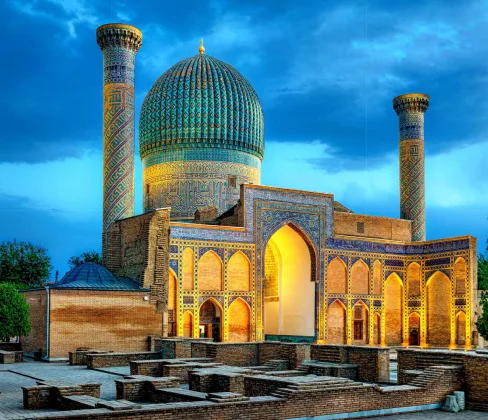
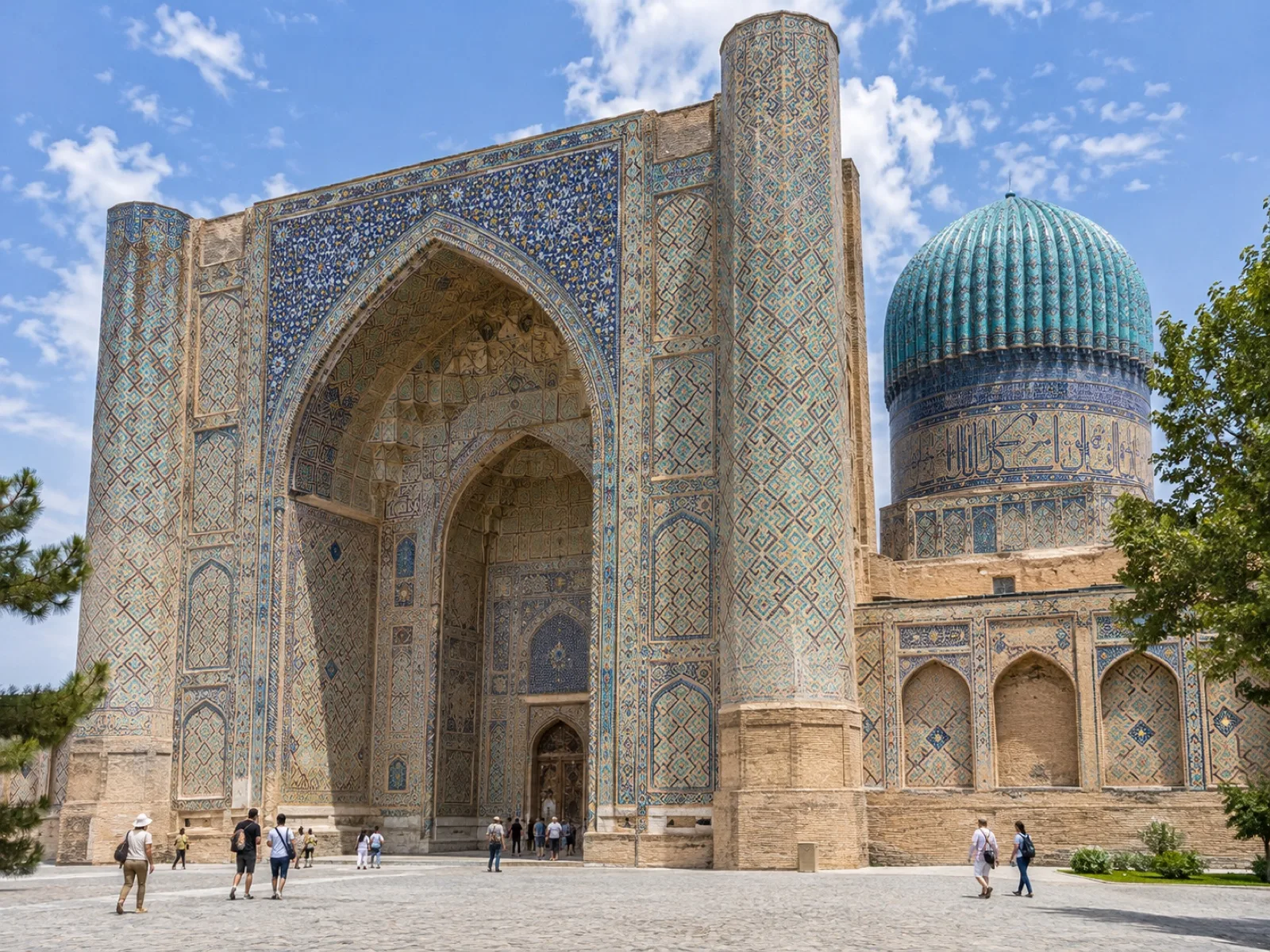
Siab Bazaar and the Bibi-Khanym Mosque are about a 10-minute walk away. Next door is the Afrasiab settlement — the site of ancient Samarkand — with a museum that houses 7th-century murals. The next stop is the Gur-Emir Mausoleum.
 Buy a ticket for the route