

Gur-Emir Mausoleum
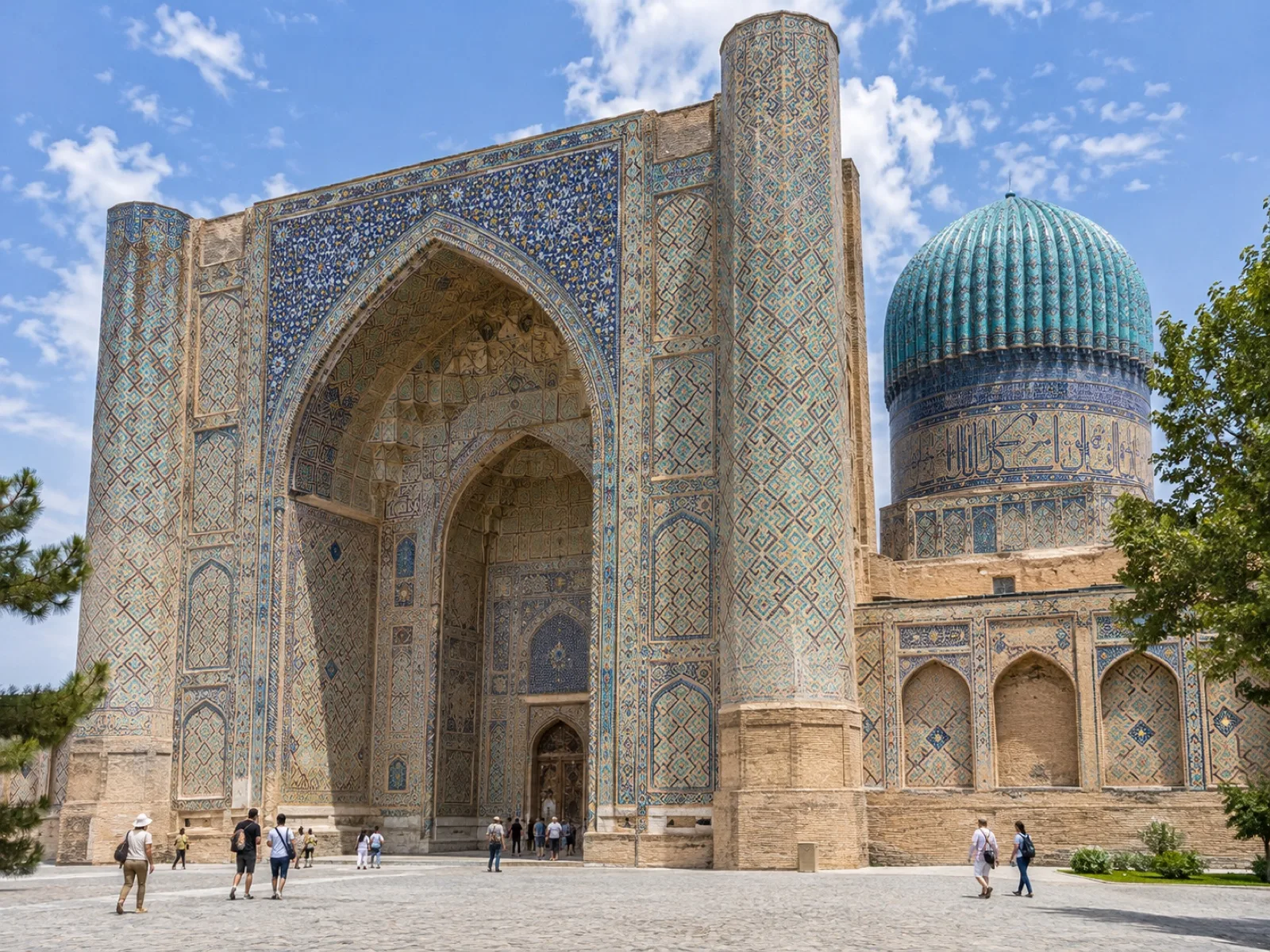
The tomb of Amir Temur and Ulugh Beg under a ribbed turquoise dome — the first sight on the route and one of the symbols of the Timurid era.
About this place
Gur-Emir — “the Tomb of the Emir” — is the family mausoleum of the Timurid dynasty. Amir Temur rests here with his sons and grandsons, among them the great astronomer Ulugh Beg. Its ribbed turquoise dome can be seen from afar and has become one of the symbols of Samarkand.
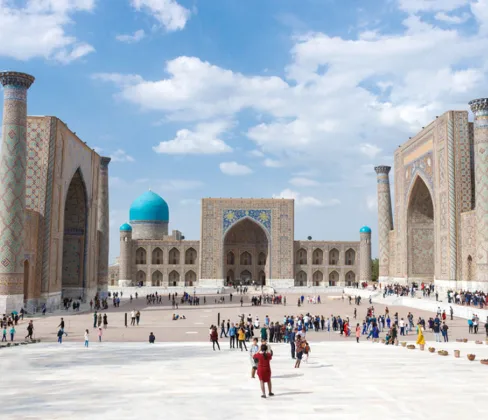
The monument stands in a quiet quarter about 900 metres from Registan. It is a good place to start: the Timurid story told here helps you understand everything you will see next.
History of the mausoleum
Construction began in 1403 on Timur’s orders, in memory of his beloved grandson Muhammad Sultan, who died on campaign. In 1405 Timur himself was buried here.
Ulugh Beg turned the mausoleum into the dynasty’s family tomb and added a gallery. He was buried here in 1449. In 2001 Gur-Emir was inscribed on the UNESCO World Heritage List together with the historic centre of Samarkand.
Architecturally, the mausoleum is an octagonal building with a dome on a tall drum. This silhouette became a model for later builders: its echoes can be seen in the tombs of the Mughals in India, Timur’s descendants.
What to see inside
- Timur’s tombstone, cut from a single block of dark green jade. The stone was brought to Samarkand in Ulugh Beg’s time.
- The main hall — onyx panels, gold painting and relief decoration in papier-mâché.
- Marble tombstones of the Timurids around Timur’s own. The actual graves lie in a crypt below the hall.
- The dome — ribbed, faced with turquoise tiles and set on a tall drum with large inscriptions.
The legend of the tomb
In June 1941 Soviet scientists opened Timur’s tomb, and a few days later the war began. Samarkand still tells this story. The anthropologist Mikhail Gerasimov then reconstructed Timur’s face from his skull.
Practical tips
- Time. 45–60 minutes is enough for a visit.
- When to go. In the morning, when it is quiet. In the evening the mausoleum is beautifully lit.
- Dress. This is a place of remembrance: cover shoulders and knees and keep your voice down.
What’s nearby
The Rukhabad and Ak-Saray mausoleums are a few steps away. Registan is about a 15-minute walk through shady streets, or one stop by bus.
 Buy a ticket for the route