

Bibi-Khanym Mosque
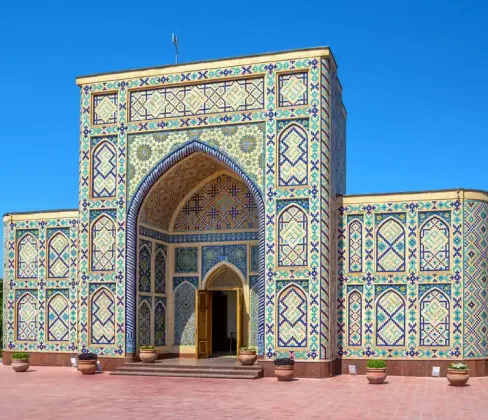
Timur’s colossal congregational mosque, founded after his Indian campaign: a towering portal, turquoise domes and a giant marble Quran stand.
About this place
The Bibi-Khanym Mosque is Timur’s most ambitious building in Samarkand. In the early 15th century it was one of the largest mosques in the Islamic world. Even today, after centuries of decay and restoration, a person at the foot of its portal looks tiny.
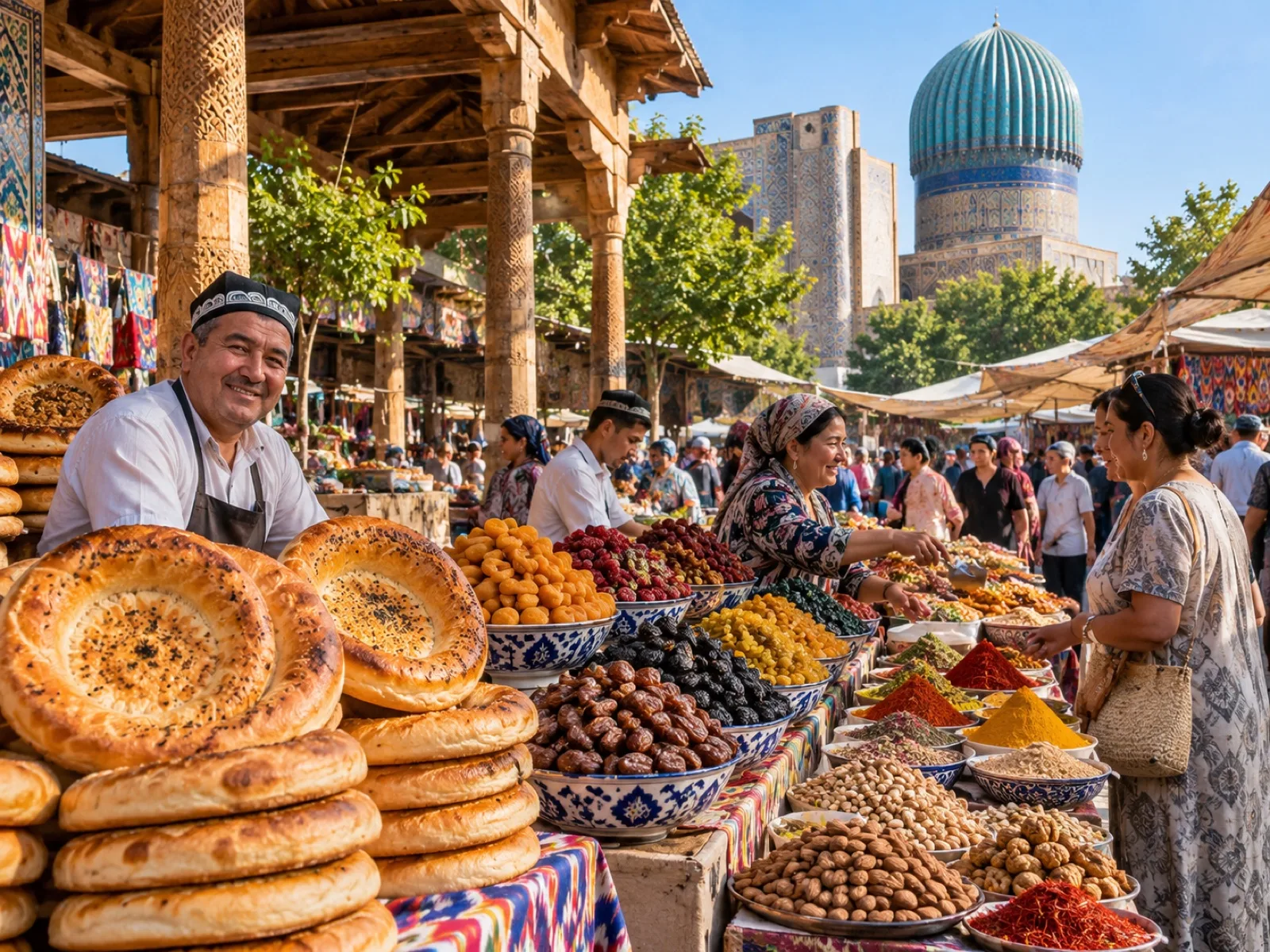
The mosque stands on pedestrian Tashkent Street, a stone’s throw from Siab Bazaar, so the two are easy to visit together.
History of the mosque
Timur founded the congregational mosque in 1399, after returning from his campaign in India. It was built in a hurry, and by 1404 the work was largely finished. By tradition the mosque bears the name of Timur’s senior wife, Saray Mulk Khanum, known to the people as Bibi-Khanym.
According to the chroniclers, craftsmen were gathered from all over Timur’s empire — from Iran, Azerbaijan and India. Heavy stone blocks were hauled by elephants brought back from the Indian campaign.
Haste and sheer scale took their toll: the vaults began to crumble soon after completion, and the earthquake of 1897 brought part of the building down. Large-scale restoration began in the second half of the 20th century and continued after independence.
The legend of the architect
Legend says Bibi-Khanym herself had the mosque built as a surprise for Timur’s return. The architect fell in love with her, delayed the work and asked for a kiss as his reward. Guides love to tell how the story ends — and there are several versions.
What to see
- The main portal — a huge arch that once led into the courtyard.
- Three domed buildings — the main sanctuary and two smaller mosques on either side of the courtyard, clad in turquoise tiles.
- The marble Quran stand in the centre of the courtyard. Local belief holds that it helps women who hope to have children.
- The Bibi-Khanym Mausoleum across the road — a tomb associated with the queen.
Practical tips
- Time. 40–60 minutes is enough.
- When to go. Morning or late afternoon: the large courtyard has little shade.
- Dress. Cover shoulders and knees; women may want a light scarf.
- Combine it. Head straight to Siab Bazaar after the mosque — it is right next door.
What’s nearby
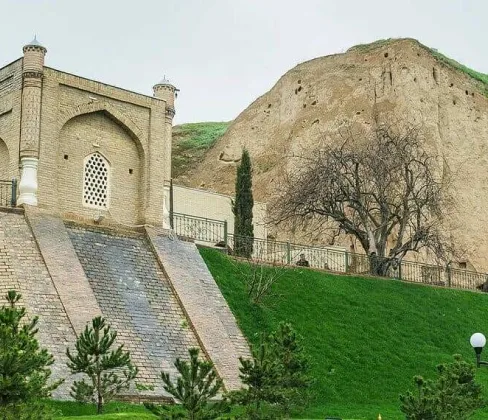
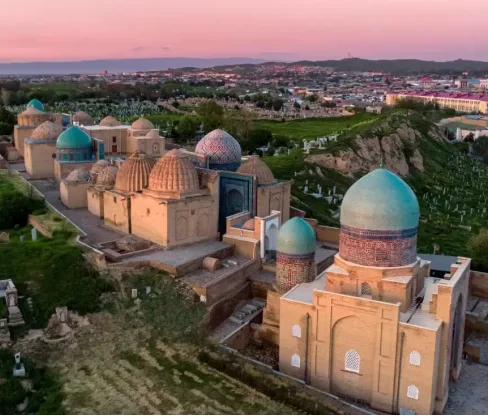
Siab Bazaar begins right by the mosque walls. Further on, at the foot of Afrasiab hill, lies the Shah-i-Zinda Ensemble. Registan is about 10 minutes away along pedestrian Tashkent Street.
 Buy a ticket for the route