

A Walk Through the Old City of Tashkent: From Ancient Madrasahs to the Bustling Bazaar
Modern Tashkent often surprises travelers with its wide European avenues, its abundance of fountains, its well-kept green parks, and its new high-rise complexes. Yet behind the facade of this high-tech metropolis, its ancient historical heart still beats, carefully preserved. If you are looking for "the real, authentic East" with the aroma of fresh baking, the noise of an Eastern bazaar, and centuries-old architectural masterpieces, you absolutely must head to the Old City of Tashkent. In this piece, we, the Tashkent City Tour team, will explain how this historic district is laid out and which route to choose to feel its character to the fullest.
Where it is and how to get to the Old City (Eski Shahar)
Locals call this historic part of the city "Eski Shahar." Geographically, the district lies in the northwestern part of the capital. Unlike the regular grid of the new development, the streets here have kept their historic, tangled layout.
The main logistical landmark for all tourists is the famous Chorsu metro station (Uzbekistan line). There are three convenient ways to get here.
- By metro. The fastest way to avoid the city's traffic jams. Chorsu station is a work of art in itself, and its exits lead straight to the bazaar of the same name. If you are heading to the religious complex, you can use the Tinchlik or Gafur Gulyam stations.
- By taxi. Just type "Chorsu Bazaar" or "Khast-Imam Complex" into your app. The drive from the city center (from Amir Temur Square) takes about 15 to 20 minutes.
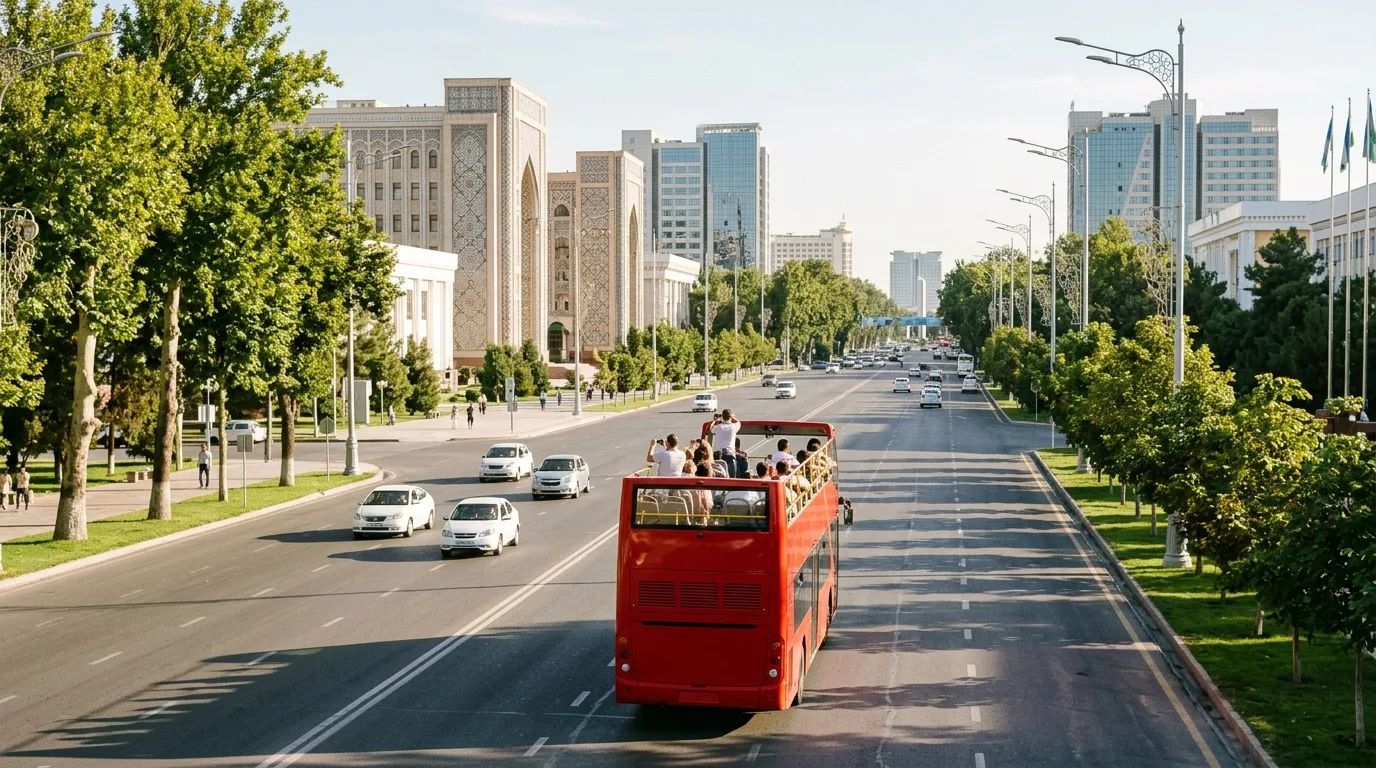
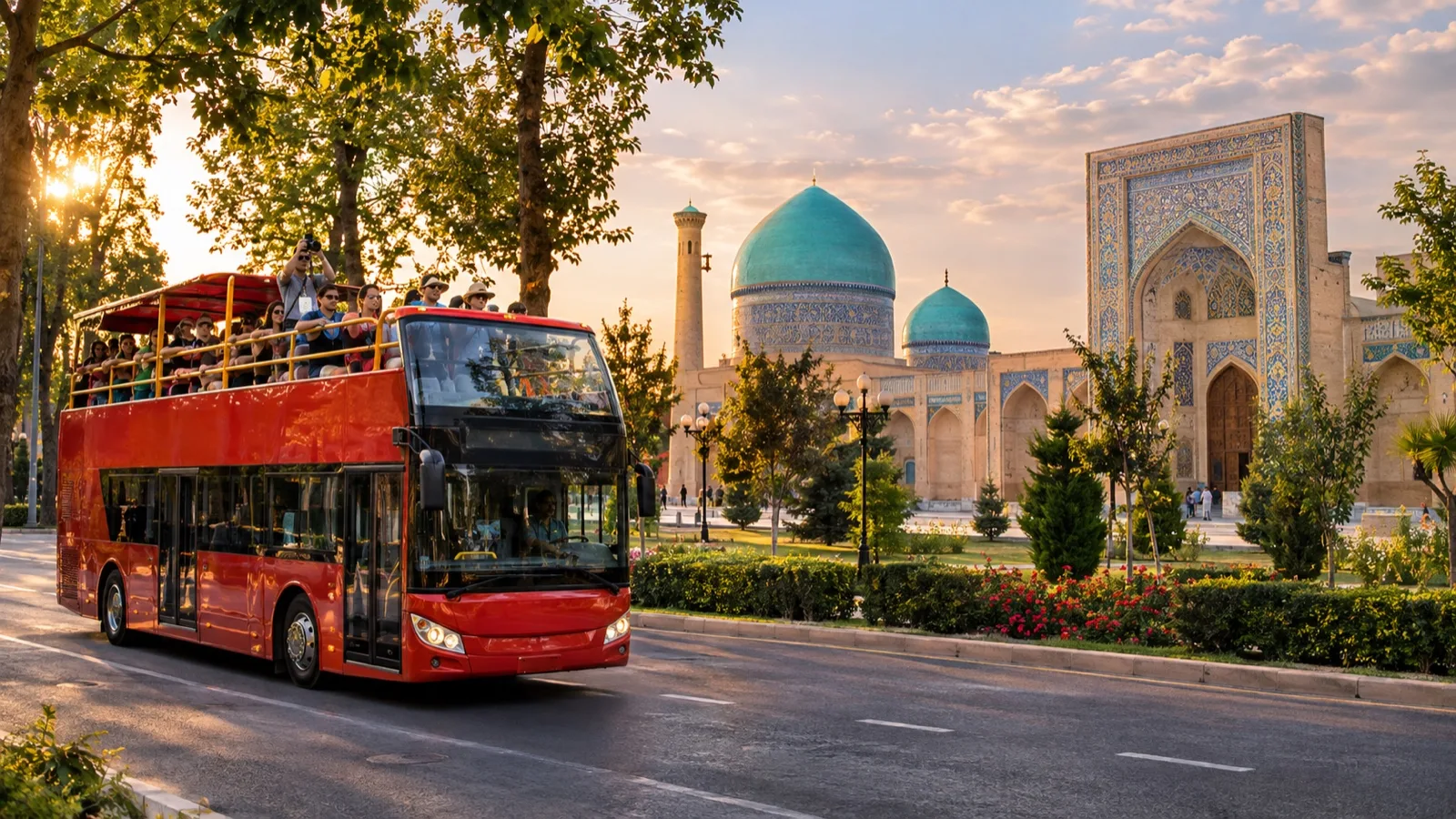
- By sightseeing double-decker. The ideal option for those who want to combine the journey with a tour. Our red double-decker Tashkent City Tour bus makes mandatory stops here. You can ride to the location in comfort while listening to the audio guide, get off to view the monuments, and then continue on your way.
What to see in Old Tashkent: the essential route
To avoid getting lost in the maze of ancient streets and still see everything that matters, we recommend using a proven Old Tashkent route that ties together the key monuments of culture and cuisine.
The Hazrati Imam (Khast-Imam) religious complex
This is the spiritual center not only of the capital, but of all Uzbekistan. A majestic ensemble spreads across a vast square: the Barak-Khan madrasah, the Tilla-Sheikh Mosque, and the mausoleum of the saint Abu Bakr Kaffal Shashi. This is where you will see the signature monumental architectural style of the medieval era: portals faced with deep azure and turquoise mosaic, and minarets soaring into the sky.
In the small building of the Muyi Muborak museum-library is kept the greatest relic of the Muslim world, the original of the oldest Uthman Quran (7th century), written on deerskin. It is a unique historical treasure that draws pilgrims and scholars from all over the world to old Tashkent. This is where you'll capture the deepest and most atmospheric photos of the Old City, thanks to the scale of the square and the play of light on the domes.
The Kukeldash madrasah and the Juma Mosque
The Kukeldash madrasah, built in the second half of the 16th century, is one of the largest surviving educational institutions of its time in Central Asia. Its tall portal is decorated with traditional majolica. Nearby stands the Juma Mosque (Friday Mosque) of Khoja Ahrar Vali, the oldest surviving mosque in the city, whose three domes are visible from many points across the district.
Chorsu Bazaar
Right from the walls of the Kukeldash madrasah, the road leads to the very heart of trading life, Chorsu Bazaar. It is impossible to mistake for anything else, thanks to its giant, futuristic sky-blue dome adorned with national ornaments. Beneath this dome, lively trade goes on across two levels: mountains of dried apricots, raisins, almonds, Eastern sweets, spices, and the famous Tashkent lemons.
Guide's tip. Be sure to find the famous "food row" (osh markazi) inside the bazaar. It is a separate pavilion where the main dishes of Uzbek cuisine are cooked over open flame in enormous cauldrons. Definitely try the narin here (the thinnest homemade dough with finely chopped horse meat or beef and a fragrant broth), the kazy (a traditional horse-meat sausage), and the juicy shashlik. The atmosphere here is as colorful as it gets, and the food is truly homemade.
The living mahallas of Old Tashkent
If the historic complexes are the grand facade of the old capital, then its soul is hidden a little deeper, in the traditional residential quarters, the mahallas. These are unique labyrinths of narrow, winding lanes and low mud-brick houses that conceal spacious, shady inner courtyards with grapevines behind their blank walls.
Life here flows at its own unhurried, centuries-old rhythm. Strolling through a mahalla, you will see elders (aksakals) chatting by the gates, children playing, and the smell of freshly baked hot bread drifting from the tandyrs (traditional clay ovens). This is the place where reaching the genuine traditions of old Tashkent is easiest of all.
Etiquette rules for tourists walking through a mahalla
- Greet the locals. In the East it is customary to greet even strangers. A simple "Assalomu alaykum" will bring a sincere smile.
- Dress code. The mahalla is a conservative residential quarter. Clothing for the walk should be modest: it's best for both men and women to cover their shoulders and knees.
- Respect personal space. Don't photograph locals without their clear consent (especially older people and women). If you'd like to take a portrait, just politely ask permission.
- Don't be afraid to talk. Uzbek hospitality is no myth. If you are invited into a courtyard for a bowl of tea, accept, it is a sign of deep respect for a guest.
Frequently Asked Questions (FAQ)
What is best to see in the Old City of Tashkent if you're short on time?
If you only have 2 to 3 hours, focus on two main points: the Hazrati Imam architectural ensemble (to see the ancient architecture) and Chorsu Bazaar (to soak up the trading atmosphere and try the local food). They are relatively close to each other.
Is it safe to walk the narrow mahalla streets on your own?
Yes. Tashkent is an exceptionally safe city, and the residential mahallas are no exception. The locals are very friendly and will always point you the right way if you get tangled up in the maze of old streets.
Begin your journey into history with Tashkent City Tour
The Old City holds many secrets that are hard to notice without an experienced guide. To make your walk as comfortable and informative as possible, and to spare you from constantly checking maps on your phone, take advantage of our tour programs.
Go to our official website tashkentcitytour.uz, choose the double-decker city route, or book a private walking tour with a professional guide. We will show you the most colorful corners of Eski Shahar, share amazing legends, and make sure you fall in love with this ancient city forever!